
Advanced Prompting: Are You Winning the Right Work?
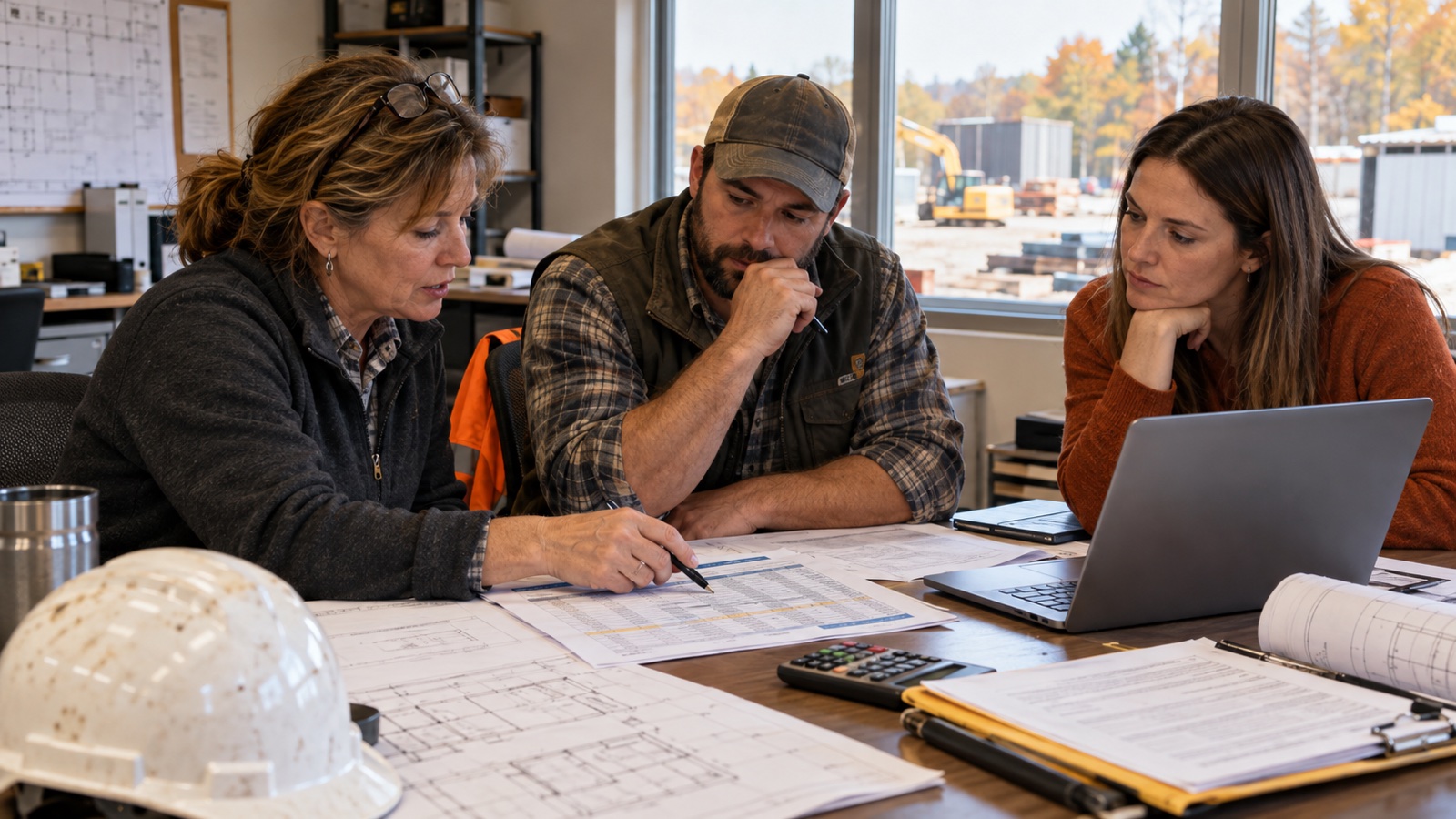
A high win rate sounds great. I’d still want to know what happened after we won.
Did those jobs finish with the margin we expected? Did the same kinds of work keep looking better in the estimate than they did at closeout? And are we taking what we learned back into the next bid?
For construction folks wondering whether they’re leaving money on the table, that’s where I’d start. Not by asking AI to choose a new markup. I’d ask it to help connect the bid history to the completed-job records, show its calculations, and find a few patterns worth discussing.
Here’s how I’d approach that review, including a prompt you can copy into an AI workspace your company has approved for the information involved.
First, separate winning work from making money on it
On our AB-09 product page, we use a fictional bid history to show a simple comparison: seven wins from fourteen renovation bids, versus two wins from ten new-construction bids. That’s a 50% win rate compared with 20%.
Those are synthetic demonstration records, not customer results. And they contain bid outcomes, not actual project margins.
I’d use that comparison to ask why the results differ. I wouldn’t use it to decide that renovation work is more profitable, that new construction isn’t worth pursuing, or that the company should raise its prices.
The question I really want to investigate has two parts: Which work are we winning, and how does that work perform once we deliver it? A bid log helps with the first part. The second needs the records from the jobs themselves.
Bring the right records, not every file in the company
I’d start with a manageable period and a set of work the estimating and finance teams can review together. I don’t need years of information on the first pass. I need enough context to understand what we’re comparing.
For the bid history, I’d gather the project identifier, work type, bid date, final submitted amount, and outcome. Project size and customer can provide useful ways to group the records where those fields are available. I’d also identify revisions so three versions of one proposal don’t become three separate bidding opportunities.
For the completed jobs, I’d bring the matching identifiers, the estimate behind the accepted work, the final revenue and cost records, and the approved changes. I’d ask the finance team to confirm which figures belong in the comparison and whether the jobs are actually closed out.
I’d keep the original estimate visible rather than replace it with the latest revised budget. I want to see what we expected at bid time, what changed, and where the job ended up. Otherwise, we could be answering a different question without realizing it.
If the files can’t be matched, or the revenue and cost definitions aren’t consistent, I’d deal with that before discussing the findings. A missing match should appear on an exceptions list, not disappear from the review.
I’d also agree where the work will happen before uploading confidential records. We configure bidding reviews on the AB-09 Private Intelligence Appliance using agreed data formats and checked calculations. The AI processing stays on the customer’s network, without sending those files to an outside AI model.
The prompt I would use
This is a starting prompt, not a claim that every chat system can read every export or perform the calculations. I’d use it in a workspace configured for the files and analysis involved.
Review the approved bid history and completed-job records I've uploaded. First list what you can read and flag missing outcomes, duplicate bid versions, unmatched job IDs, and unclear revenue or cost definitions. Ask me to resolve anything that would materially change the comparison before proceeding. Use one agreed final bid per opportunity. Separate pending, withdrawn, and canceled bids from decided bids. Compare decided-bid win rates by work type and size, showing wins, total bids, calculations, and source rows. Flag small groups.
For matched completed jobs, compare estimated and actual gross margins using consistent definitions, keeping approved scope and budget changes visible. Use calculation tools, show formulas and source records, and state anything you cannot verify. Leave the original files unchanged. Give me up to three patterns worth investigating, clearly separating what the records show from possible explanations. For each, identify the missing evidence and a question for our estimating meeting. Do not conclude we underpriced work or should raise prices from win rates alone.
I’d answer the clarification questions before asking it to continue. If it can’t perform or verify the calculations, I’d stop that part of the review rather than accept a narrative that only looks like an analysis.
What I want back from that prompt
I don’t want a long report that starts with a confident recommendation and hides the working. I’d want three things I can bring into a meeting.
A clear account of what was included
Which bids were counted? Which completed jobs were matched? Which files, rows, or fields couldn’t be used? I’d check a few against the originals. If the review leaves out an important set of jobs, I want to know before I interpret the pattern.
Comparisons I can check
For win rates, I’d want the number of wins and decided bids beside each percentage. For completed jobs, I’d want estimated and actual results side by side, with the relevant changes visible and references back to the records. I’d have the finance team check that we’re comparing the same things.
A short list of questions, not an automatic pricing decision
I’d ask it to identify the strongest patterns the records support, even if that’s fewer than three. Each should come with an explanation of what we know, what we don’t, and what to check next. If the files only support a win-rate comparison, that’s the result. I don’t want it filling in a profitability story.
Then ask a more specific follow-up
Once I’ve checked the first pass, I’d narrow the conversation. If one group of completed jobs appears to fall short of its estimated margin, I’d ask it to show the individual jobs behind that finding. Is the pattern spread across the group, or is one job driving it?
Next I’d look at whether the records distinguish a problem in the original estimate from changes during delivery. If the supporting information is missing, I’d ask the PM or estimator rather than have AI guess.
That matters for the original question about leaving money on the table. A shortfall between estimated and actual margin doesn’t, by itself, tell me what price the customer would have accepted. I’d treat it as a reason to investigate the estimate and the job, not proof that we could have charged more.
I’d bring the findings to the people who priced, ran, and reconciled the work. They can explain details the files don’t capture. Then I’d agree on one thing to check or change before the next comparable bid, with someone responsible for following it through.
Why I care about using your own information
Generic estimating advice can’t tell me what happened on your jobs. The useful context is in your bid history, your costs, and the notes that explain how your company works.
That is the reason we built AB-09. It’s a physical AI appliance installed in your office, with a familiar browser interface for your team. Prompts, uploaded documents, and answers are processed locally rather than sent to an outside AI model.
For this kind of bidding review, we work with your team on the inputs and calculations. We also coordinate with your IT provider, configure access, train the people using it, and handle agreed maintenance and support.
Local processing doesn’t make an answer correct or replace permissions and security. It gives us a way to work with approved company information while keeping AI processing inside your network. We still need to check what the system read and what it calculated.
We’re based right here in Dover, NH, and we serve construction companies across New England. I like that the conversation can be about an actual estimating problem, with a real team available to help, rather than another tool your staff has to figure out on their own.
Bring a better question to the next estimating meeting
I’d call this review useful if it gives your team a few questions backed by records: Which jobs need a closer look? Which estimating assumptions should we revisit? What information are we missing before we change anything?
You don’t need to let AI set your prices to get value from it. Start by asking whether the work you’re winning is delivering what you expected.
For folks who want to try that with private AI, take a look at the AB-09 Private Intelligence Appliance and book a demo. Tell us the question your estimating team would like help answering. There’s no need to send confidential bid or project files with the request.