
AI Is Already Changing How We Solve Hard Problems, Including Ones That Matter Most
Artificial intelligence is not just a future promise. It is actively being used today to tackle problems as complex as cancer treatment.
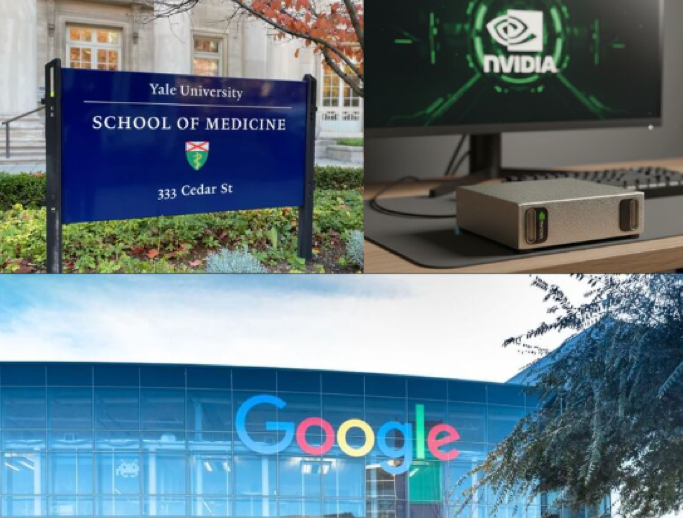
Researchers from Google Labs and Yale School of Medicine recently released an AI model capable of interpreting the language of human cells. This is not a theoretical exercise. The model identified a new way to make tumors more visible to the immune system, and scientists confirmed the results in living cells. The task given to the system was very specific:
Find a drug that increases immune visibility only when a tumor already shows some immune response.
What happened next is remarkable. Out of roughly four thousand drugs tested in simulation, between ten and thirty percent of the top results were already known drugs, which is a strong validation signal. The remaining results pointed to entirely new and unexpected candidates.
This pattern will sound familiar to anyone in construction or estimating. When you give a system real constraints and real data, the best results are not random guesses. You get a mix of proven answers and new insights you would never uncover manually. It is the same principle behind AI-assisted takeoffs, bid forecasting, or schedule optimization. Good data in, meaningful decisions out.
What makes this moment especially interesting is how accessible the technology has become. The model and code are open source, and with new desktop-scale compute options like NVIDIA’s DGX Spark, even independent engineers or small teams can experiment with serious machine learning workloads from home. That means exploration and discovery are no longer limited to massive institutions with unlimited budgets.
Of course, running models from a home office is not the same as operating a full biomedical lab. Just like in construction, software alone does not pour concrete or build a bridge. But the digital side, modeling scenarios, testing assumptions, and narrowing down viable options, is suddenly within reach for far more people than ever before.
It is easy to imagine a student in computational biology, a PhD researcher with a small local cluster, or even a curious engineer applying these tools to uncover the next breakthrough. The same shift is already happening in construction, where smaller firms can now use AI to compete with organizations that once had a massive data and staffing advantage.
The future of discovery is not on the horizon. It is already here, driven by AI and by people willing to put it to work.
Credit to Google Labs, Yale School of Medicine, and everyone in David van Dijk’s lab for pushing the science forward and for sharing their work in a way that invites others to build on it.
We’re pushing the envelope for construction in our way every day … want chat about exactly how? Reach out and let’s chat about how we can automate some of your most time-consuming processes at hello@automatebetter.ai