
Real-World Construction AI: When Better Data Removes Jobsite Friction
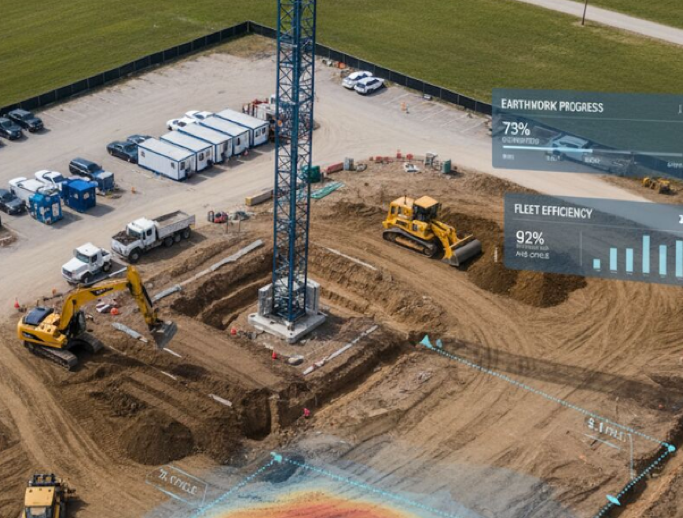
After working closely with contractors across multiple trades, one theme shows up again and again. Many jobsite problems are not the result of bad plans or poor intent. They come from operating without timely, accurate data.
When visibility is limited, the same issues keep appearing: • Crews waiting with nothing productive to do • Equipment parked while materials are still en route • Trucks and aggregate showing up too early or missing the window entirely • Production slowing down with no clear explanation in the moment
We have seen this pattern play out on project after project. Recently, our focus has been on building AI tools that are actually usable in the field, not just interesting on paper. The biggest gains tend to come from improving how contractors manage resources, material movement, and timing.
Some of the most effective AI-driven capabilities we have implemented include: • Automatically recognizing every truck leaving a yard or plant • Measuring real cycle times instead of relying on assumptions • Identifying consistent drivers versus those who regularly cause delays • Forecasting arrivals before they impact the jobsite • Providing dispatch with a simple visual signal to manage spacing and flow
When these pieces work together, the outcomes are hard to ignore: • Material waste drops from the typical 5 to 10 percent range down to roughly 1 to 2 percent • Fewer production stoppages and last-minute surprises • Schedules that become far more predictable • Cleaner, more efficient plant and yard operations • Stronger, data-supported decisions when selecting drivers and subcontractors
To put real numbers behind this, hauling inefficiencies and poor timing on a highway or infrastructure project can easily cost a contractor one to two million dollars. With the right data and controls in place, we have seen those losses reduced by fifty to eighty percent.
The real shift happens when AI models are trained on what actually occurs on jobsites. That is what turns chaotic, hard-to-manage workflows into processes that are measurable, repeatable, and profitable.
If you are interested in how AI could help reduce waste or improve production on your projects, feel free to reach out to us at AutomateBetter.ai!