
When every estimator has a spreadsheet, who has the full picture?
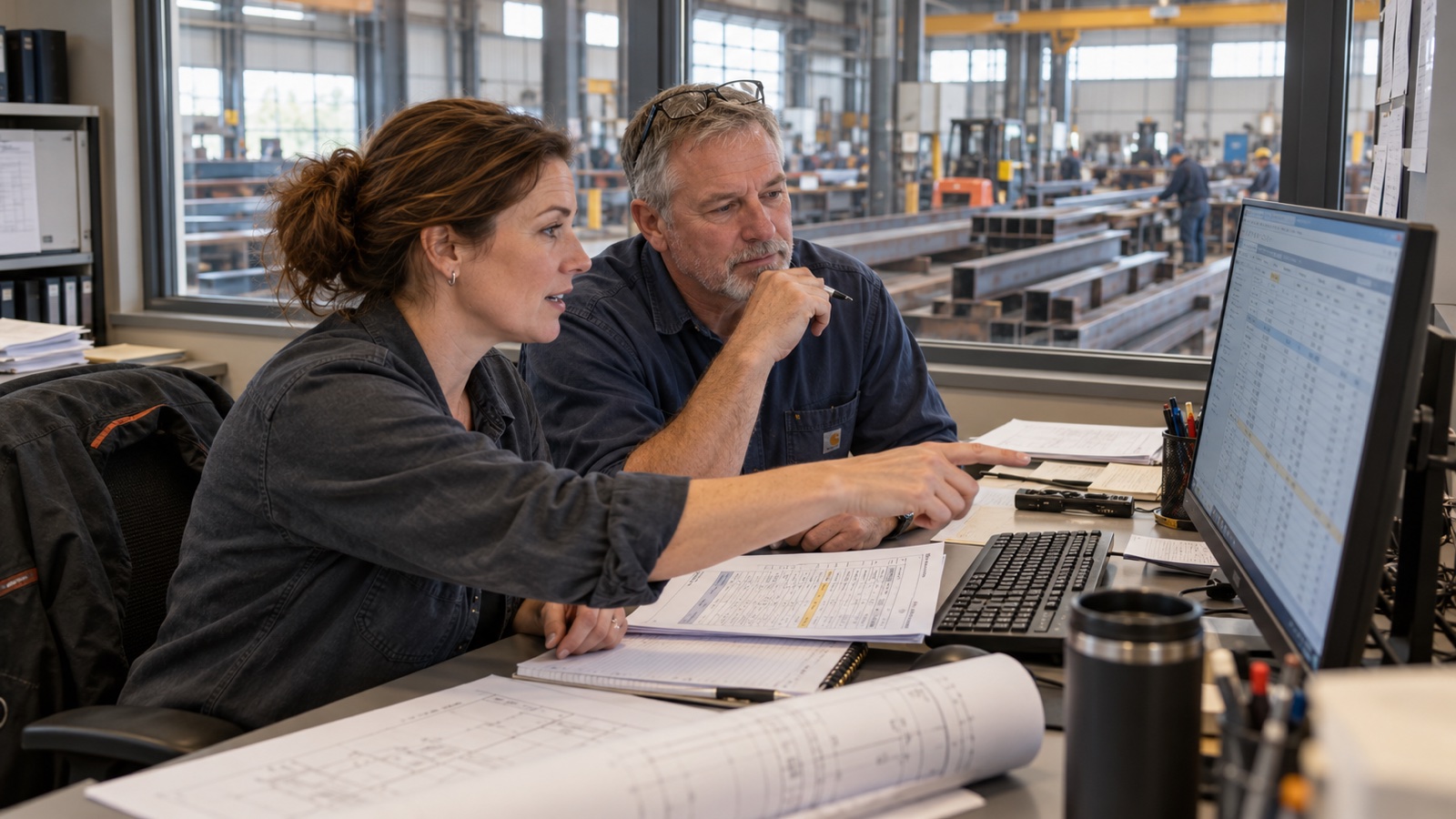
How we helped a New England metal fabrication company make its estimating information useful beyond the person who created it.
The information existed. Getting to it was the problem.
At a New England metal fabrication company we work with, estimators started each project from a spreadsheet template. They filled in customer information, line items and the details needed to build an estimate. Other project information lived across whiteboards and separate business tools.
That approach gave each estimator a place to do the work. It did not give colleagues an easy way to see and use one another’s information. Finding something could mean tracking down the person who had worked on it and talking through where the relevant details were stored.
When we began working together, that was one of the problems we needed to address: useful business information was separated by person, project and tool. The task was not simply to put a spreadsheet on a different screen. It was to make the information easier to use across the team.
A useful individual tool can still leave a team with gaps
The estimating spreadsheets were not evidence that the company had been doing everything wrong. They captured the way its people understood and priced their work. The templates were familiar, and the team had already invested effort in developing them.
The difficulty appeared when information needed to travel beyond an individual estimate. One estimator’s previous work was not readily available to another. Project managers also needed access to information stored in different places. People became the route to finding records that the business already held.
For us, that distinction mattered. We were not looking for a reason to criticize spreadsheets or replace every tool the company used. We were looking at where the existing arrangement made collaboration unnecessarily difficult.
A useful question for a business owner is not just whether information has been saved. It is whether the next person who needs it can find it, understand what it relates to and judge whether it applies to the work in front of them.
We started with the way the company already worked
The owner initiated the engagement, and day-to-day collaboration moved to an estimator and project manager who knew the work firsthand. That internal knowledge was essential. We could take responsibility for the software, but the client understood the decisions its people needed to make.
We used the existing estimating spreadsheet as a starting point for the application. We also looked closely at the company’s proposal format and used it to inform the proposal workflow.
The intention was to preserve familiar business concepts while improving how the information was managed. Estimators should be able to recognize their work in the new system, rather than feel that the process had been designed without them.
That is different from copying every tab and field without question. Existing documents gave us something concrete to discuss: what needed to stay familiar, what information needed to be shared and where a different approach could help.
One practical example: information from past vendor quotes
Vendor pricing showed why shared information mattered. The company had historical quotes, including prices for raw steel and other fabrication materials. Much of that information was held in PDFs that were difficult to search. Estimators would often request pricing from suppliers when preparing new work.
We built a shared quote library and a way to search it from within estimating. An estimator can look for a material, inspect the supplier and quote date, open the original source and choose a suitable line to bring into the estimate.
The important change is that a quote received for earlier work can become useful to someone preparing a different estimate. The information is no longer useful only when someone remembers which document contains it.
Historical pricing still needs judgment. An old quote is not a promise of today’s price or availability. The estimator remains responsible for deciding whether the information is appropriate or whether an updated supplier quote is needed. The software makes that decision easier to inform; it does not make it on the estimator’s behalf.
The application grew through working conversations
The engagement did not begin with a complete specification for the platform it would become. We started with a smaller application and practical technology needs. As the client saw working features, it identified more opportunities to improve the way the business operated.
A weekly working session gave that development a consistent rhythm. Our lead architect and the client’s main stakeholder reviewed what had been delivered, discussed changes and decided what to tackle next.
That kept the work connected to real operations. A feature was not finished merely because we could demonstrate it. The client had the opportunity to examine it, use it and tell us what needed to change.
The broader lesson from this engagement is that the value of custom software is not its uniqueness. It is whether the software addresses a specific problem in the way a business works. Here, shared access to estimating and supplier information gave the team a more useful starting point than separate files alone.
Start with the information people keep asking for
You do not need to begin by deciding that your business needs an entirely new system. Start with a recurring question: what information do people repeatedly ask a colleague to find?
Follow one example through the business. Where is it first recorded? Who needs it next? What do they have to do to get it? That conversation can reveal whether the next step is organizing existing tools, connecting them or building something different.
We work with construction and service businesses to turn those practical needs into working software, with the people doing the work involved throughout.
Contact us about one piece of information your team keeps having to chase. We can start there.