
Advanced Prompting: Is the Cheapest Quote Actually the Cheapest?
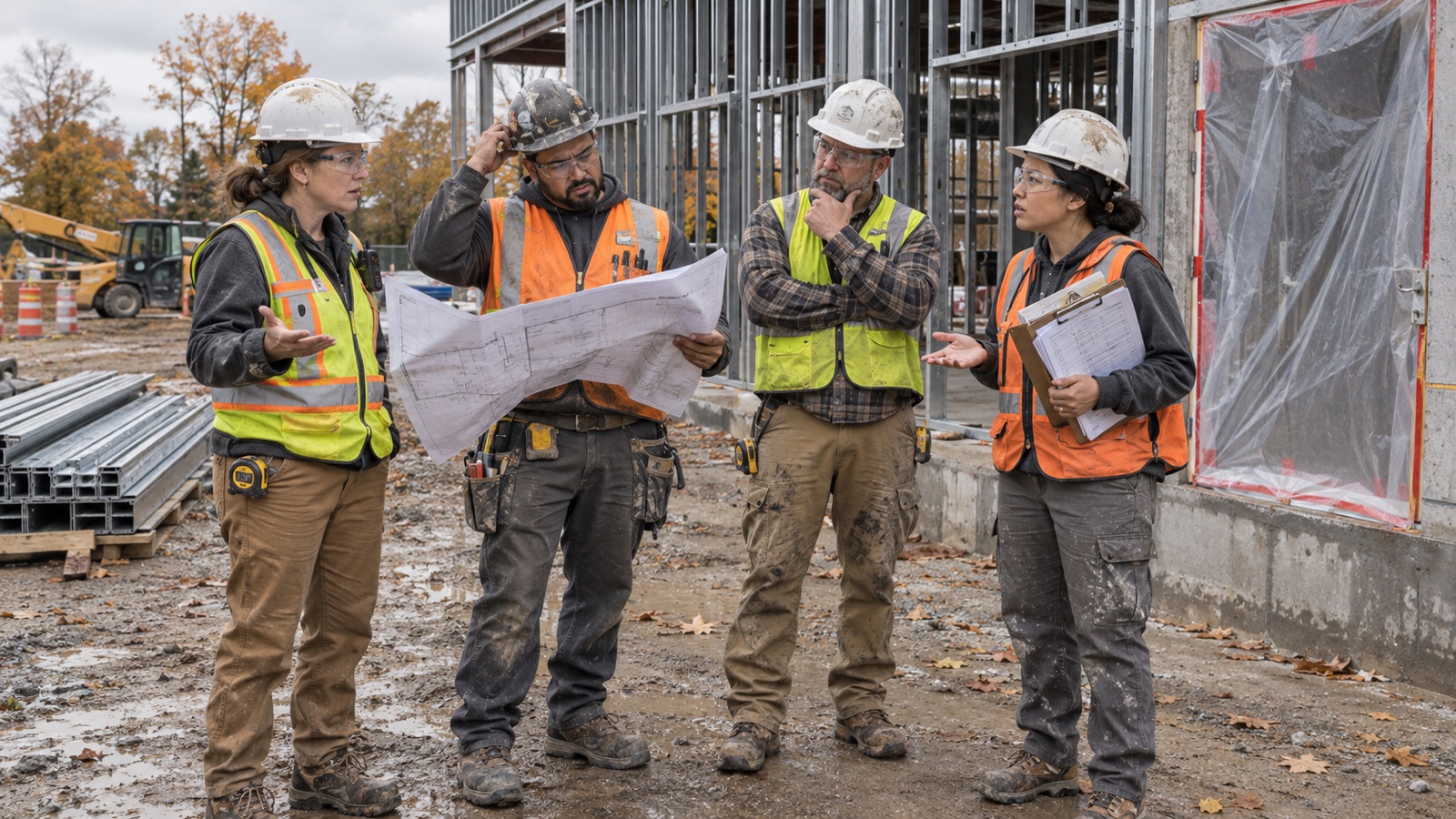
A practical AI prompt for comparing subcontractor quotes, finding scope gaps, and asking better questions before you award the work.
The lowest quote isn’t always the lowest cost.
I know that’s not a revelation to anyone who’s spent time estimating construction work. But it’s easy to forget when three numbers are lined up in a spreadsheet and one of them is noticeably lower than the others.
Maybe that subcontractor found a smarter way to do the work. Maybe they’ve got a crew available and really want the job. Or maybe their price doesn’t include something the other two bidders carried. Those are very different explanations.
I’ve been thinking about how I’d use AI to help an estimating team sort through those differences. Not to pick the winning subcontractor, and definitely not to make up prices for missing work. I’d use it to compare what the quotes actually say, flag what’s unclear, and prepare the questions I’d want answered before making a decision.
Here’s how I’d approach it, including a prompt you can copy into a company-approved AI workspace.
First, are we even pricing the same work?
Imagine three subcontractors quote the same package. One includes temporary protection, one excludes it, and the third doesn’t mention it at all. If you rank the quotes on price alone, you’ve treated three different scopes as though they’re identical.
The important word there is “doesn’t mention.” An item that isn’t stated in a quote isn’t automatically included, and it isn’t automatically excluded either. It’s an open question.
This is where I think AI can be helpful. A person still needs to understand the drawings, specifications, and commercial terms. But a system that can read the approved bid package and the submitted quotes can help organize the comparison, point to the language behind each finding, and keep track of questions that deserve follow-up.
I wouldn’t start by asking, “Which subcontractor should we hire?” I’d start with, “Are these three quotes actually comparable?”
Give the system the right documents
For a first pass, I’d pick one trade package and gather the documents the estimator would normally use to level the bids: the relevant scope, current drawings and specifications, applicable addenda, and the quotes themselves, including attachments and qualifications.
I’d label which version of the bid documents is current. If a quote was submitted before the latest addendum, that’s something the review should identify, not quietly ignore. I’d also include any bid form or scope checklist the team already uses. There’s no reason to throw away a process that works.
Before uploading, make sure your company is comfortable with where the files will be processed. Subcontractor pricing, exclusions, and internal estimating notes can be commercially sensitive. Use a system approved for that information, and respect any confidentiality requirements that apply to the quotes.
One other thing: I’d ask the AI to inventory the files first. If it can’t read a scanned attachment or misses a drawing note, I’d rather know that before it presents a polished comparison.
The prompt I’d use
This is a starting point for an AI workspace that can read the supplied documents and provide references to them. It’s meant to produce a review checklist, not an award recommendation.
Review the approved bid package, applicable addenda, and subcontractor quotes for [trade or scope]. First list the files and versions you can actually read, and flag any unreadable attachments or conflicting document dates. Compare each quote against the same scope requirements. Create a side-by-side table of inclusions, explicit exclusions, quantities, allowances, alternates, schedule assumptions, material or equipment specifications, and stated commercial conditions. Cite the page, section, or quoted language supporting each entry. Use “not stated” when a quote is silent, rather than assuming the work is included or excluded. Do not change any quoted prices or invent costs for missing scope.
Identify the differences that make these quotes difficult to compare, separating confirmed scope differences from unanswered questions. Flag any quote that appears not to address a relevant addendum, but don't assume the bidder failed to include it without evidence. Draft a short, neutral clarification email for each bidder that asks only the questions needed to make the scopes comparable. Finish with a prioritized review checklist for our estimator, including source references and anything the system could not verify. Do not select a subcontractor, assign a price to an omission, or send any messages.
I especially like the instruction to say “not stated.” It’s a small change that can keep a plausible-looking AI answer from turning uncertainty into a fact.
What I want to see in the answer
A comparison I can trace back to the documents
I’d want one row per meaningful scope item, with each bidder’s stated position and a reference to the original quote or bid documents. If a requirement is in the specifications but the quote doesn’t address it, show that clearly. If a bidder explicitly excludes it, show that separately.
And if the system couldn’t read a document, it should say so. A missing page isn’t proof that the bidder omitted the work.
A short list of the differences that matter
Not every wording difference needs a phone call. I’d ask the estimator to prioritize differences that could materially change scope, schedule, responsibility, or the way the bids are evaluated.
For example, a quote that excludes off-hours work is different from one that includes it. A quote based on a particular equipment model may need checking against the specifications. A proposal that references an older addendum may need confirmation. Those are useful things to bring into a leveling conversation.
Clarification emails I can actually send after review
I’d have the AI draft questions in plain language: “Can you confirm whether temporary protection is included?” or “Does your price incorporate Addendum 3?”
Then I’d have a person review the questions against the bid rules and send them through the proper channel. The AI shouldn’t negotiate, contact bidders, or revise the official bid record on its own.
A simple fictional example
Let’s say we’re comparing three fictional quotes for a trade package. Bidder A quotes $185,000 and explicitly excludes a required protection item. Bidder B quotes $194,000 and states that the item is included. Bidder C quotes $189,000 but doesn’t say whether it’s included.
Those prices are illustrative, not actual customer bids. The lowest stated number is Bidder A’s, but the three offers aren’t yet on the same scope basis. We don’t know what it would cost to address A’s exclusion, and we don’t know C’s position. It’s too early to call one of them the lowest comparable price.
What I’d want from the AI is a clear comparison, the exact language supporting it, and two questions for the estimator to follow up on. I would not want it to invent a $5,000 allowance and declare the problem solved.
Even when the scope is aligned, the lowest price isn’t automatically the right award. Qualifications, capacity, schedule, relationships, and other considerations still matter. The AI can help organize the evidence. The contractor makes the decision.
A few mistakes I’d watch for
The first is comparing an old quote against a newer scope without noticing the revision. The second is treating silence as confirmation. The third is taking an AI-generated summary at face value without opening the source documents.
I’d also watch for double counting. An allowance might already be included in a base price, or an alternate might be additive rather than a replacement. Those distinctions have to come from the quote language, not a guess.
And I’d be careful about asking AI to calculate an “apples-to-apples price” before the bidder clarifications are back. You can show the submitted numbers and document known adjustments. You can’t know the cost of an unknown scope item just because a model is willing to supply a number.
Why I’d want this analysis to stay private
Here’s where the conversation gets interesting for construction companies. The documents that make the comparison useful are also documents you might not want to send to a public AI service: subcontractor prices, qualifications, internal bid notes, and project details.
That’s one reason we built the AB-09 Private Intelligence Appliance at AutomateBetter. It’s a physical AI system installed at your office. Your team uses a familiar browser interface, and the AI processing happens inside your company’s network rather than sending prompts and uploaded documents to an outside AI model.
We configure the appliance around the team’s approved information and workflows. For more specialized analysis, we work with the company to agree on file formats, checks, and the review process. We also coordinate with your existing IT provider and handle agreed training, maintenance, and support.
We’re based in Dover, NH, and work with construction companies across New England. I like the idea of being able to talk with a real person about how an estimator actually works, instead of just handing them another piece of software and hoping they figure it out.
Private processing doesn’t make the AI infallible. Somebody still needs to confirm the documents, review the findings, and make the award decision. But keeping the AI processing local can make it more practical to work with approved information that a company wouldn’t otherwise want to share with an outside provider.
Start with one trade package
If I were testing this tomorrow, I’d pick a trade package with two or three quotes, use the current bid documents, and ask the AI to build a comparison and draft the clarification questions. Then I’d sit down with the estimator and see what it got right, what it missed, and whether the review saved any back-and-forth.
I’d call it useful if it helped us ask one important question before award instead of discovering the answer after the job starts. That’s a much better goal than having AI announce a winner.
For folks who want to explore this kind of work with private AI, take a look at our AB-09 Private Intelligence Appliance and book a demo. Tell us which part of your estimating process you’d like help with. There’s no need to send confidential bid documents with the demo request.