
Identifying and Managing Risk in Construction Projects
There is a common saying that meaningful rewards rarely come without risk. In many industries, stepping outside your comfort zone is part of growth. Risk and failure can be powerful teachers.
Construction is different. While some risk is unavoidable, unmanaged risk can quickly erode margins, schedules, and trust. The goal is not to eliminate uncertainty entirely, but to identify what can be anticipated and put controls in place before issues escalate.
The question every contractor should be asking is simple: which risks can be spotted early enough to be measured, planned for, and managed?
Financial and Budget Risk
Budget pressure is one of the most common and painful challenges on any job. Material price volatility, supply availability, and shifting market conditions can disrupt even the best estimates.
While no one can fully remove market uncertainty, historical data is a powerful tool. Reviewing year-over-year trends in pricing, quantities, and job performance allows teams to make more informed assumptions instead of relying purely on instinct. Data does not remove risk, but it helps make it visible.
Labor Availability
Workforce shortages across the construction industry are well known. Many firms respond by padding margins to protect against last-minute labor costs, often resulting in less competitive bids.
A more sustainable approach is planning labor needs earlier and more deliberately. Understanding when crews will be needed, where gaps may occur, and how workloads overlap allows companies to reduce reliance on expensive, last-minute solutions. Smarter planning lowers risk without inflating bids.
Contract and Scope Risk
Contractual challenges can surface with clients, subcontractors, and suppliers alike. Small miscommunications early on often turn into costly issues later.
Common areas to watch include:
- Change order management
- Poorly defined scope or incomplete drawings
- Ambiguous contract language
- Coordination issues with subcontractors and vendors
Clear documentation and early alignment are often the difference between controlled change and avoidable conflict.
Safety and Project Management Risk
Two of the most critical risks on any project are safety and leadership. Safety incidents caused by environmental conditions, insufficient training, or simple accidents impact people first, but they also carry serious financial and reputational consequences.
Similarly, weak project management can derail productivity, delay schedules, and strain client relationships. Strong leadership and clear communication reduce risk across every phase of a project.
Bringing Risk to the Surface
With so many potential variables, risk identification can feel overwhelming. The reality is that risk management is not about predicting every outcome. It is about asking the right questions early.
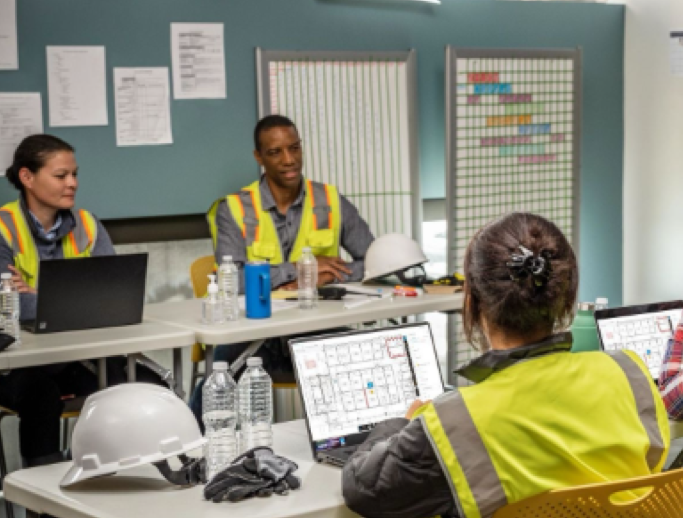
Before each project begins, bring key team members together and walk through realistic “what if” scenarios. Discuss budget exposure, labor constraints, scope clarity, and contractual assumptions. These conversations often uncover blind spots that are easy to miss when teams move too quickly.
Risk is unavoidable in construction, but surprises do not have to be. Teams that stay informed, plan deliberately, and rely on data alongside experience are far better positioned to handle challenges when they arise.
There may be no reward without risk, but there is far less risk when preparation comes first.
Curious what parts of your risks could be automated and eliminated? We’re building tools like this every day at AutomateBetter.ai … reach out and let’s chat about how we can automate some of your most time-consuming processes at hello@automatebetter.ai