
Why Good Construction Estimators Burn Out
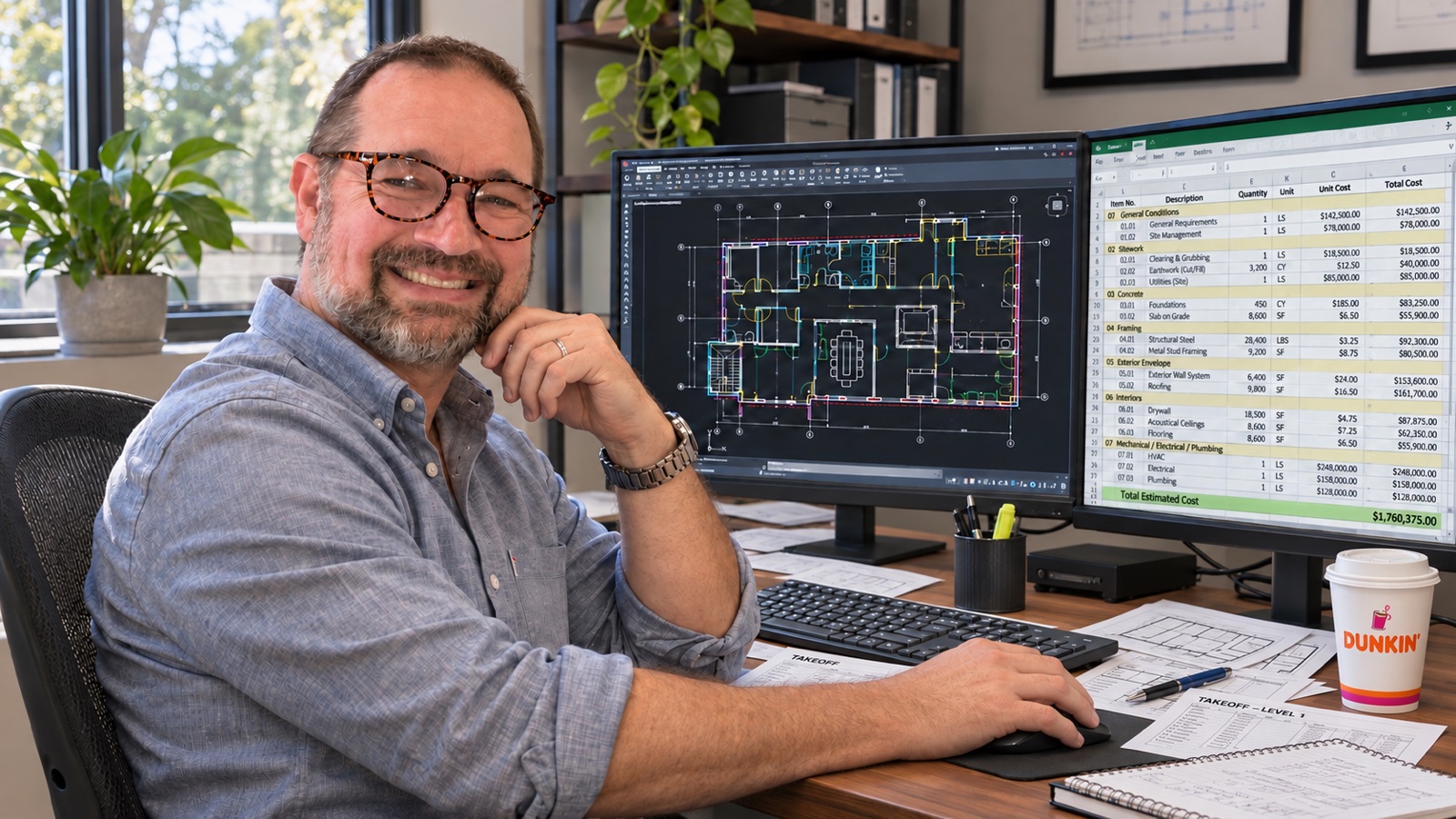
Construction companies can’t find enough good estimators … maybe they are burning out the ones they already have?
If you’re a construction estimator, the frustrations go well beyond having too much to price. There’s the bid schedule that assumes drawings arrive complete, subcontractor quotes arrive early, and nobody issues a substantial addendum the afternoon before submission. Apparently, reviewing scope is something you can squeeze in between chasing quotes and uploading the bid.
Then there’s training: a previous estimate, a spreadsheet full of unexplained formulas, and someone too busy to answer questions. Handing somebody last year’s workbook doesn’t qualify as developing an estimator.
Recognition gets strange, too. Win the job, and attention moves straight to delivery. Lose it, and suddenly everyone has time to examine your number.
And the relationship with project managers can be exhausting. An exclusion gets missed during handoff, a different construction approach gets used, or scope gets added - and the estimate becomes the first suspect. Estimators make mistakes. They should own them. But every cost overrun deserves an actual explanation.
And then there’s the pressure to keep projects profitable while being pushed to reduce allowances and sharpen pricing to win. You can remove a contingency from a spreadsheet. The risk doesn’t politely leave with it.
I think companies underestimate how much judgment they’re asking for, then treat the person providing it like a replaceable spreadsheet operator. Good estimating requires technical knowledge, commercial judgment, relationships, and the confidence to challenge assumptions. That takes time to develop - and decent working conditions to retain.
A few things I’d change:
-
Make bid priorities real. When another tender lands, decide what moves or gets declined. Stop quietly making evenings the capacity plan.
-
Give training actual time. Assign a mentor, review takeoffs together, and explain why allowances and production rates were chosen.
-
Require a proper handoff. Estimators and PMs should review scope, exclusions, assumptions, and risks together before work starts.
-
Review results without hunting for a culprit. Compare estimated and actual costs, understand the differences, and feed that knowledge into future bids.
Pay matters … but so does being trusted when you say a deadline is unreasonable or a price leaves too little room for the work.
What did I miss? What else needs to change?
Contact us to talk about your estimating workflow.